Best MRI for Trigeminal Neuralgia (TN): What to Ask For and Why It Matters
If you suspect trigeminal neuralgia, the “best MRI” is usually not just a standard brain MRI. For many patients, the most useful study is a high-resolution MRI focused on the trigeminal nerve, often paired with vascular imaging to look for neurovascular compression (a blood vessel pressing on the nerve).
This guide explains what the MRI should evaluate, what sequences matter (in plain English), and what to request so you can avoid the frustrating “normal MRI” that doesn’t answer the real question.
Why an MRI is part of a proper TN workup
Trigeminal neuralgia is diagnosed mainly from your symptoms and exam, but MRI is commonly used to:
Rule out secondary causes (like tumors, multiple sclerosis, vascular malformations) that can mimic TN or cause TN-like symptoms.
Assess for neurovascular compression near where the trigeminal nerve enters the brainstem, which can influence whether procedures like microvascular decompression (MVD) are considered.
Important nuance: MRI can be extremely helpful, but imaging findings must be matched to your symptoms, because some degree of “contact” between a vessel and the nerve can show up even in people without TN.

The “best MRI” for trigeminal neuralgia is a trigeminal nerve protocol
1) High-resolution 3D T2 sequence (this is the big one)
Ask for a thin-slice, high-resolution 3D T2 sequence that clearly shows cranial nerves in fluid.
You may see names like:
CISS (Siemens)
FIESTA (GE)
DRIVE (Philips)
These sequences are widely used to visualize the trigeminal nerve and nearby vessels with strong contrast between cerebrospinal fluid and the nerve.
2) 3D TOF MRA (MR angiography) to map arteries near the nerve
A 3D time-of-flight (TOF) MRA helps identify small arteries that may be compressing the nerve and is commonly paired with the high-resolution 3D T2 sequence for surgical planning.
3) T1 pre/post contrast (gadolinium) to rule out structural causes
Contrast-enhanced imaging can help detect lesions along the course of the nerve (for example, certain tumors or inflammatory processes). Multiple sources emphasize MRI as the best tool for evaluating secondary causes.
4) Consider 3T MRI if available
When you have access to 3 Tesla (3T) MRI, many centers prefer it for higher signal-to-noise and better anatomic detail, which can improve visualization of neurovascular relationships.
What the radiologist should specifically evaluate (ask them to comment on this)
When the report comes back, it’s helpful if it explicitly addresses:
Neurovascular contact vs compression (and where): especially at the root entry zone near the brainstem.
Nerve deformation/atrophy (does the nerve look indented or displaced?)
Which vessel is involved (artery vs vein) and whether it matches the side of your symptoms
Secondary causes along the trigeminal pathway (cerebellopontine angle region, Meckel’s cave, cavernous sinus, etc.)
If your MRI report doesn’t comment on these, it doesn’t automatically mean “nothing is there.” It may mean the protocol wasn’t optimized or the interpretation wasn’t targeted to TN.
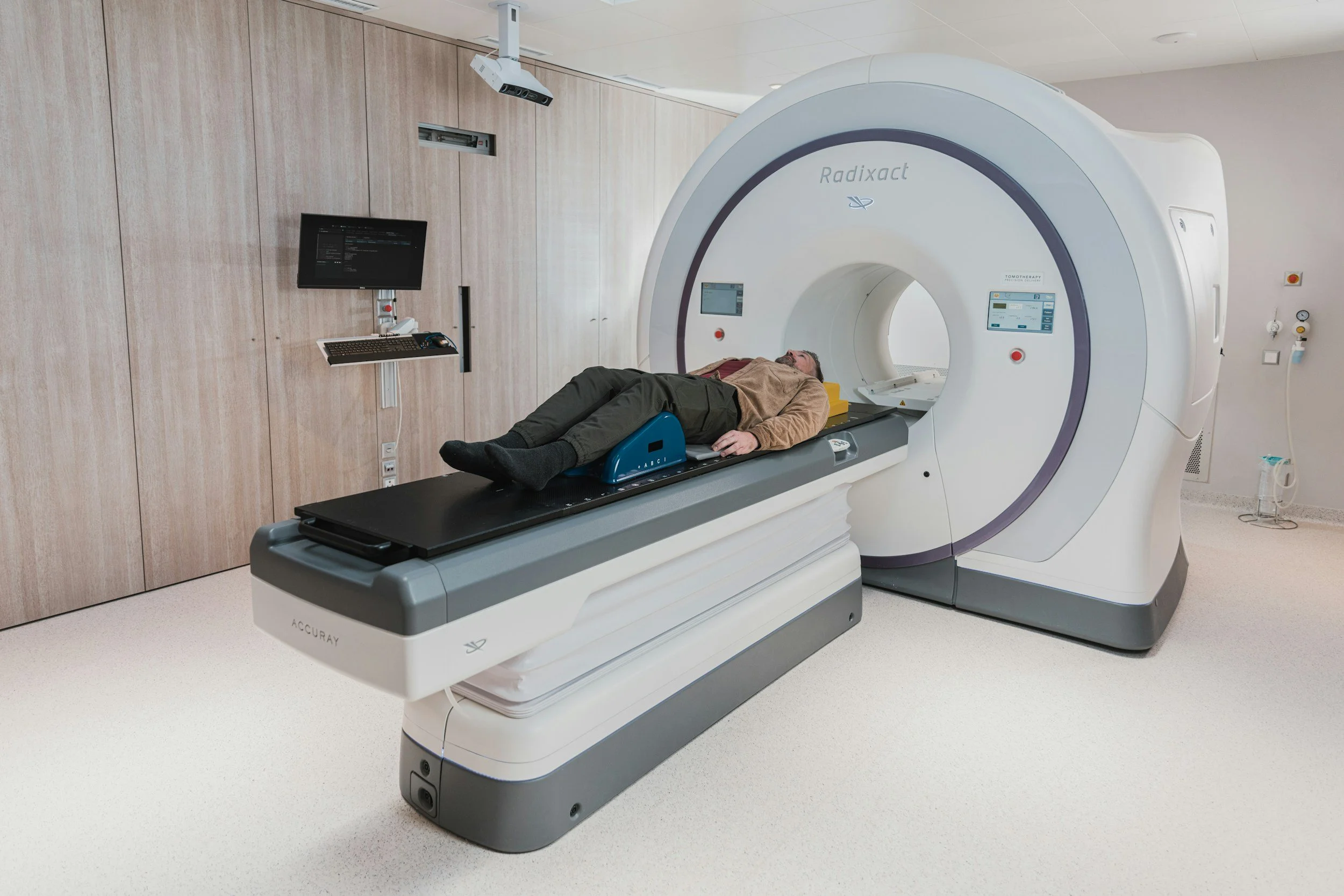
The 5 most common reasons an MRI “misses” trigeminal neuralgia clues
Standard brain MRI without thin-slice posterior fossa imaging (not focused on cranial nerves)
No high-resolution 3D T2 (CISS/FIESTA/DRIVE)
No vascular imaging (3D TOF MRA) to identify a tiny compressing artery
Motion artifact (pain can make it hard to hold still, which blurs tiny structures)
Report focuses on “brain normal” and does not address the trigeminal nerve specifically
Copy/paste: what to ask your clinician to order
You can bring this wording to your visit and ask if it fits your case:
“MRI brain with attention to the trigeminal nerves (cranial nerve V protocol), including high-resolution 3D T2 (CISS/FIESTA/DRIVE) through the posterior fossa/Meckel’s cave, plus 3D TOF MRA. Include pre/post-contrast T1 sequences to evaluate for secondary causes.”
If your symptoms are atypical (constant numbness, weakness, or sensory changes), that’s another reason imaging should be thorough.
What to bring to your specialist visit (this matters more than people realize)
Bring both of these:
The radiology report
The actual MRI images (disc or digital link/portal download)
TN decisions, especially procedural ones, often depend on reviewing the images directly, not just reading the report.
Quick expectations: what an MRI can and can’t tell you
MRI can help:
Identify structural causes (tumor/MS/etc.)
Show vascular relationships that may support classical TN and guide procedural planning
MRI can’t do perfectly:
“Prove” TN by itself (TN is still primarily a clinical diagnosis)
Guarantee that a visible vessel contact is the cause of pain (clinical matching matters)
Resources
NHS: Trigeminal neuralgia diagnosis
Practical Neurology (BMJ): Trigeminal neuralgia, a practical guide (PDF)
Cleveland Clinic Journal of Medicine: Guidelines for management of trigeminal neuralgia
ACR Appropriateness Criteria: Cranial Neuropathy (JACR)
Radiopaedia: Trigeminal neuralgia protocol (MRI)
The Radiology Assistant: Trigeminal neuralgia and neuropathy
AJNR: 3T 3D-CISS + 3D-TOF MRA for neurovascular compression (PDF)
AJNR: Contrast-enhanced 3D-CISS and outcome prediction (PDF)
ICHD-3: Trigeminal neuralgia classification (International Headache Society)
European Radiology (Springer): MRI in trigeminal neuralgia (2025)